
A Study in Care
Guidance for light, water, and balance.
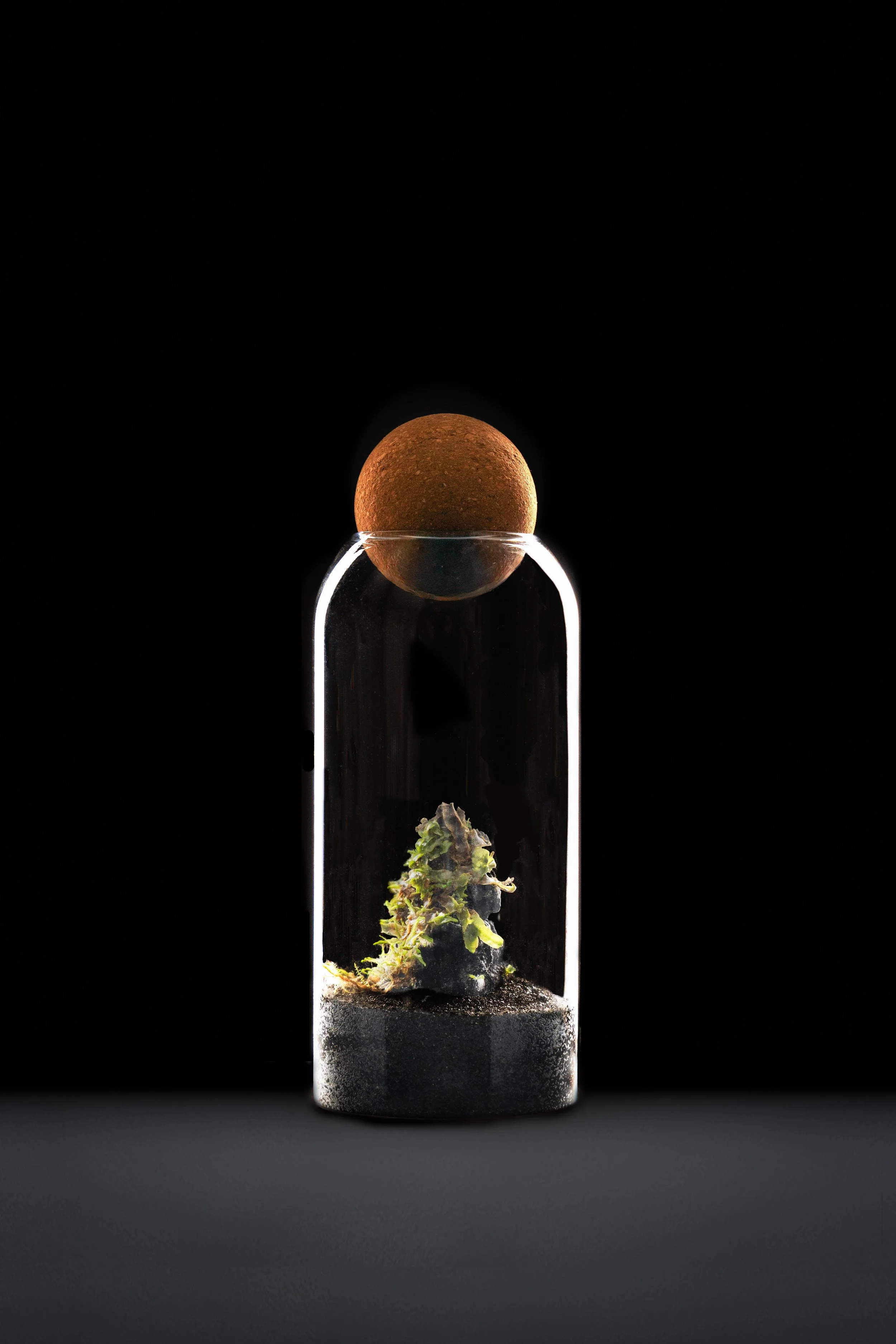
A closed terrarium is a quiet system — largely self-sustaining, requiring only light, stability, and occasional attention.
With minimal intervention, it will find its own balance and evolve over time.
Light & Temperature
Light
Place in bright, indirect light. Direct sun should be avoided, as it can overheat the glass and stress the plant. A north-facing window, or a position set back from stronger light, is ideal.
Temperature
Maintain a consistent environment between 65–75°F. Avoid proximity to vents, radiators, or drafts — stability is key.
Rotation
Turn the vessel slightly — about a quarter turn—once a month to encourage even growth and balanced exposure.
Water
A closed cycle
Within a sealed terrarium, moisture continuously circulates. Many pieces will go months without needing additional water.
What to look for
A healthy terrarium will show a subtle daily rhythm — light condensation forming and then clearing. This indicates equilibrium.
When to water
If condensation has not appeared for several days, introduce a small amount of moisture. A light mist is sufficient.
Water quality
Use distilled water when possible, especially for moss. Minerals and chlorine in tap water can disrupt the system.
Restraint
Avoid over-watering. There should never be standing water at the base. Excess moisture can lead to imbalance, including root rot or algae.
Maintenance
Pruning
Trim sparingly to maintain proportion and allow each element space.
Cleaning
If buildup appears on the glass, open the vessel and wipe gently. Remove any fallen or yellowing leaves. Do not introduce cleansers or chemicals.
Air
Once a month, open the terrarium briefly — about 30 minutes — to refresh the environment.
Closing Note
Each Study is composed by hand and designed to evolve slowly.
Small shifts are natural. Imperfection is part of the system.